


















Industrial Mixers: Precision Tools for Modern Manufacturing

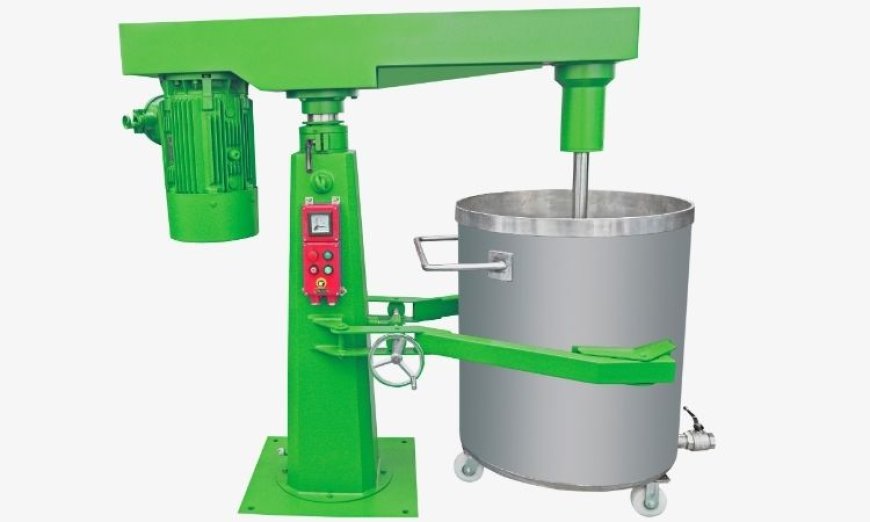
In the heart of countless manufacturing processes, where ingredients meet innovation, lie the powerful yet often overlooked machines known as industrial mixers. These devices are the unsung heroes of product uniformity, blending, and consistencyquietly working behind the scenes to ensure that every batch, every blend, and every formula is perfectly balanced. Whether in food processing, pharmaceuticals, chemicals, or construction materials, industrial mixers are the backbone of scalable and repeatable production.
Their role is not merely mechanicalits transformative. They turn raw materials into finished goods, fragments into fluids, and chaos into cohesion. Every drop of paint, spoonful of ketchup, tablet of medicine, or coating on metal likely owes its consistency to the expert work of an industrial mixer. They are the silent machines that bring order to the chaos of production lines, ensuring that quality is never compromised.
Expert Market Research Insights
According to Expert Market Research, the growing demand for process automation and product consistency is pushing industries to invest in smarter and more adaptive mixing technologies. Their analysis highlights that sectors ranging from cosmetics to chemicals are increasingly dependent on industrial mixers to achieve precise formulations, reduce processing downtime, and enhance safety.
This shift towards innovation isn't just about speedits about intelligence. The adoption of mixers with automated controls, digital monitoring, and real-time diagnostics is helping manufacturers anticipate failures, reduce maintenance costs, and improve energy efficiency. EMR points out that modern-day industries no longer view mixers as static machines but as integral components of a dynamic production system. Informed decision-making about mixer design and integration now translates directly into competitive advantage.
The Science Behind the Blend
Mixing is a science as much as it is a mechanical function. The goal isnt just to combine materials but to achieve a consistent distribution at the molecular level. Different applications require different types of mixersribbon blenders for dry powders, emulsifiers for liquids, high-shear mixers for tough compounds, and paddle mixers for granules. Each type is tailored to handle specific viscosities, textures, and reaction sensitivities, making the choice of the right mixer critical to operational success.
Industrial mixers also affect processing time, product yield, and energy consumption. The speed of the blades, the shape of the mixing vessel, and even the angle at which materials enter the chamber play roles in the final products quality. A well-designed mixer doesnt just blendit optimizes. It reduces waste, increases batch uniformity, and accelerates throughput. For industries running on tight timelines and high standards, thats a significant advantage.
Where Precision Meets Productivity
Efficiency in industrial mixing is not just about speed. Its about control. Advanced mixers come equipped with programmable logic controllers (PLCs), sensors, and automation systems that allow for real-time adjustments based on viscosity, temperature, or load. This level of precision enables manufacturers to scale operations while maintaining product integrity.
Imagine a pharmaceutical plant producing a liquid medication. A minor inconsistency in mixing could alter the effectiveness of the drug. Similarly, in food production, uneven distribution of ingredients could affect flavor, texture, or shelf life. In such high-stakes environments, industrial mixers serve as the gatekeepers of quality. Their accuracy determines whether a product meets safety, regulatory, and performance standards.
Adapting to Industry Needs with Versatile Designs
Industrial mixers arent one-size-fits-all. Theyre custom-built to match specific industry needs and product requirements. In the chemical industry, mixers must withstand corrosive substances. In food and beverage production, hygiene and cleanability are critical. For the cosmetics industry, achieving perfect texture and smoothness can define a products success.
This has led to the development of modular designs, scalable systems, and mixers that support multiple operationsblending, emulsifying, homogenizing, or dispersingwithin a single setup. Versatility, reliability, and compliance are the cornerstones of modern mixer design. And with increasing attention to sustainability, many machines are now engineered for minimal energy use, reduced noise, and lower emissions, making them smarter both operationally and environmentally.
The Future of Mixing: Smarter, Cleaner, Stronger
As industries become more digital and data-driven, the future of industrial mixers is tilting toward smart integration. IoT-enabled mixers, predictive maintenance algorithms, and AI-controlled mixing cycles are changing the way manufacturers approach production. Real-time data collection allows operators to adjust processes instantly, improving consistency and reducing downtime.
Even sustainability is being stirred into the mix. With more emphasis on energy efficiency and waste reduction, manufacturers are choosing mixers that consume less power while maintaining optimal output. The blending of smart technology with mechanical efficiency is creating mixers that are no longer just toolsbut strategic assets in industrial ecosystems.
The Invisible Force Behind Product Perfection
Industrial mixers may not grab headlines, but their impact is monumental. They shape the texture of your lotion, the flavor of your soup, and the stability of your medicine. Their precision defines the reliability of products we use daily, from building materials to bakery goods. Behind every well-made product is a mixer that did its job with uncompromising precision and power.
In the race for quality, safety, and innovation, industrial mixers are no longer supporting playersthey're central characters in the story of industrial excellence. As industries continue to evolve, these machines will play an even greater role in pushing the boundaries of what's possible in production, mixing every element of successone batch at a time.