

















Management System Certification Market: Forecast to 2030

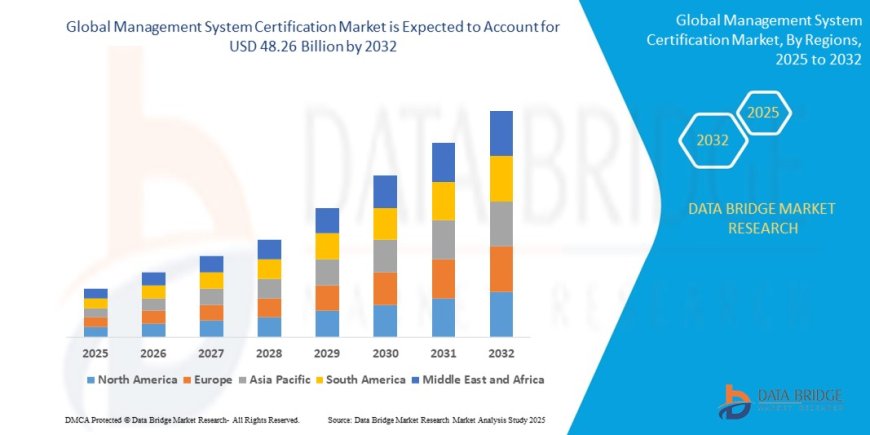
Management system certifications validate that organizations adhere to standards for quality, environment, safety, security, and more. ISO 9001 for Quality Management, ISO 14001 for Environmental Management, ISO 27001 for Information Security, ISO 45001 for Occupational Health & Safety, and ISO 50001 for Energy Management are widely adopted. Certification assures compliance with regulations, enhances operational efficiency, strengthens stakeholder confidence, and opens access to global supply chains.
Certification demand spans industries like manufacturing, healthcare, food & beverage, IT, construction, aerospace, automotive, and energy & utilities. Digital transformation, ESG (Environmental, Social, and Governance) mandates, supply chain standardization, and increasing complexity in regulatory compliance are driving adoption. The industry market size stands over USD 26 billion in 2022, projected to reach around USD 41 billion by 2030 MarketsandMarkets+11Dataintelo+11cervicornconsulting.com+11.
The Evolution
Management system certification began in the 1970s as quality assurance tools for manufacturing. ISO 9001 launched in the late 1980s, followed by ISO 14001 in the early 1990s in response to environmental concerns. Information security (ISO 27001) emerged in the early 2000s amid rising cyber threats. ISO 45001 and ISO 50001 followed to standardize occupational health and energy systems.
Certification providers evolved from in?house audits to third?party registrars like SGS, BSI, Intertek, TV SD, and Bureau Veritas. The early 2010s introduced remote audits and digital assessments, accelerated by COVID?19. Today, audit protocols are automated via AI, blockchain, and cloud platforms PR Newswire+1PR Newswire+1.
Market Trends
Digital Transformation: AI, IoT, and blockchain are streamlining audits, enabling real-time monitoring of compliance?. Digital platforms automate data gathering, reduce manual error, and enhance transparency.
Remote Audits: Remote audits became mainstream during COVID?19, offering cost savings and scheduling flexibility?Wikipedia+7GII Research+7Vogue Business+7.
ESG and Sustainability: Demand for ISO 14001, ISO 50001, SA 8000, and carbon neutrality certifications continues to grow?.
Sector-Specific Certifications: Growing need for ISO/IEC 27001 in cybersecurity, IATF 16949 in automotive, ISO 13485 in medical devices, and ISO 22301 for business continuity?.
Training & Assurance Services: Demand for support servicestraining, internal auditing, consultingis accelerating faster than certification itself?.
Emerging Markets Growth: Asia?Pacific leads with ~3842% share due to industrialization, followed by strong growth in Latin America, MEA, North America, and Europe?.
Product Certification: ISO product and carbon-footprint certifications capture ~3567% of market share, driven by consumer/environmental expectations?.
Challenges
High Costs & Complexity: Certification and recertification incur financial and resource burdens, especially for SMEs?.
Standards Fragmentation: Navigating overlapping certifications is confusing and adds to reporting burdens?.
Digital Skill Shortage: Organizations lack skilled personnel to manage digital audit platforms or analyze AI data?.
Regulatory Uncertainty: Regulatory shifts (e.g., new emissions, data protection laws) force ongoing adjustments?.
SME Limitations: SMEs often lack funds or expertise for compliance, especially when international clients demand certification?.
Cybersecurity Risks: Digital audit platforms collect sensitive data; compliance with regulations like GDPR and HIPAA is essential?.
Market Scope
Certification Types:
-
Quality (ISO 9001)
-
Environmental (ISO 14001)
-
Information Security (ISO 27001, IEC 62443)
-
Occupational Health & Safety (ISO 45001)
-
Energy (ISO 50001)
-
Business Continuity (ISO 22301)
-
Product & Carbon Footprint Certifications
Service Types:
-
Auditing, certification & verification
-
Consulting & training
-
Surveillance & recertification
Application/Industry Verticals:
-
Aerospace & Defense
-
Automotive (IATF 16949)
-
Construction
-
Energy & Utilities
-
Food & Beverage (ISO 22000, FSSC 22000)
-
Healthcare & Medical Devices (ISO 13485)
-
ICT & Cybersecurity (ISO 27001)
-
Manufacturing
-
Government & Public Sector
End Users:
-
Multinationals
-
SMEs
-
Public sector, NGOs
-
Certification bodies & registrars
-
Consultants & trainers
Geographic Regions:
-
Asia?Pacific: dominant share (~3842%)
-
Europe: ~35%; strong ESG and cyber regulations drive adoption
-
North America: 27%; demand driven by automotive and healthcare sectors
-
Latin America, MEA: growing adoption amid economic diversification
Market Size and Forecast
Market Size:
-
USD 25.1?B in 2021?GlobeNewswire+4GII Research+4Wikipedia+4WikipediaGlobal Market Insights Inc.+5Consegic Business Intelligence+5GII Research+5Wikipedia+1GlobeNewswire+1Global Market Insights Inc.+1Global Market Insights Inc.+1WikipediaGrowth Market ReportsGlobal Market Insights Inc.+1Global Market Insights Inc.+1PR Newswire
-
USD 26.4?B in 2022?
-
USD 23.5?B in 2023; CAGR 8% over 20242032?Market Research Intellect+2Global Market Insights Inc.+2Global Market Insights Inc.+2
-
USD 41.3?B projected by 2030 at 5.7% CAGR?
-
USD 40?B51?B forecast through 2030 depending on source
Forecast Summary:
-
MarketsandMarkets: USD 41.25?B in 2025 ? USD 51.24?B by 2030; CAGR 4.4%?DatainteloPR Newswire
-
DataIntelo: USD 25?B in 2023 ? USD 40?B by 2032; CAGR 5.3%?Dataintelo
-
GMI: USD 4.5?B in 2024 (likely high-end services only) ? USD 8.2?B by 2033; CAGR 8.1%?
Growth Drivers:
-
Global supply chain expansion requiring standardization
-
Rising consumer demand for safety, quality, sustainability and data security
-
Regulatory enforcement and cross-border trade
-
Digitalization enabling remote audits and real-time compliance
-
ESG and net-zero targets, carbon-neutral certifications
-
Growth of sector-specific standards in cybersecurity, automotive, energy, health
-
SME integration in global value chains
-
Training and surveillance services upgrading market offerings
Regional Highlights:
-
Asia?Pacific leads with >38% share and fastest growth (~55.3% CAGR) due to industrialization?PR NewswireDataintelo+3PR Newswire+3Global Market Insights Inc.+3.
-
Europe ~35% share and ~6.1% CAGR, driven by ESG transparency and sustainability regulations?.
-
North America ~27%, with automotive (IATF) and ICT demand?.
-
Latin America & MEA growing as regulatory alignment and infrastructure investments expand certificate adoption?.
Source: https://www.databridgemarketresearch.com/reports/global-management-system-certification-market
Conclusion
The Management System Certification Market is projected to grow from around USD 2527?B in 2023 to about USD?4151?B by 2030. Asia?Pacific, Europe, and North America lead adoption, with emerging regions closing the gap. Market expansion is driven by digital innovation, ESG demands, trade compliance, and sector-specific standards. Challenges remain in cost, system complexity, skill gaps, regulatory fragmentation, and SME inclusion.
Certification bodies and consultancies that offer integrated digital solutions, remote auditing, tailored training, affordable packages, and ESG/product-compliant services will thrive. Harmonizing certification demands and regulations across sectors and territories can further simplify compliance. As sustainability and cyber-resilience become essential business priorities, management system certifications will be indispensable for global competitiveness and stakeholder trust.